

Motorcycle LED headlight replacement begins with the mechanical base and the motorcycle electrical system, not with lumen claims. H4, BA20D and P26S are distinct base formats and should not be treated as direct replacements.
Technical diagram: identify the motorcycle base
Original identification schematic: inspect original bulb → identify flange, bayonet or prefocus mounting geometry → compare contacts and low/high beam wiring → measure housing clearance → check rated voltage and regulation → test beam alignment. Use the actual original bulb and socket as the reference.
Three base families
| Base | Key identification | Purchase check |
|---|---|---|
| H4 | Three-terminal headlamp interface with locating flange | Flange orientation, wiring and beam function |
| BA20D | 20 mm nominal double-contact bayonet | Pin/socket geometry and dual-beam circuit |
| P26S | 26 mm nominal prefocus-style base | Flange seating and optical position |
Nominal designations are not complete engineering drawings. Verify each supplied part and local vehicle specification.
LEDVEDA product references
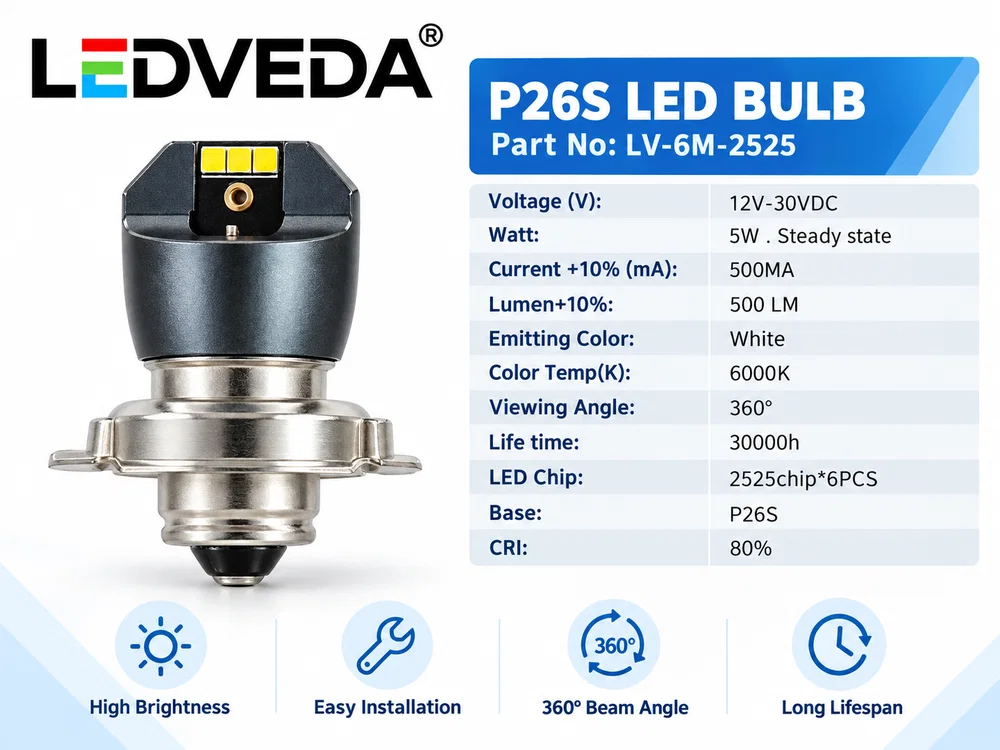
LEDVEDA H4 LV-16A is specified at 12 V DC, 20 W low beam / 32 W high beam, 2000 lm / 3000 lm and 6000 K with 2 × 3570 chips. The LV-6M-2525 P26S version is specified at 12–30 V DC, 5 W, 500 lm and 6 × 2525 chips. These are model-sheet values, not claims that the bulbs fit every motorcycle. Confirm BA20D SKU specifications separately. See the H4 product guide and sample test workflow.
Motorcycle electrical system verification
Before recommending an LED replacement, establish whether the headlight circuit supplies regulated DC, unregulated AC or a switched arrangement. Measure the supply under the conditions specified by a qualified technician, and confirm that the chosen bulb is rated for the actual waveform and voltage excursions. A printed 12–30 V DC rating does not imply AC compatibility.
For H4 dual-beam designs, verify low-beam and high-beam terminals and switching behavior. For BA20D and P26S, compare the original bulb’s base seating depth and light-source position with the LED sample. A different mounting geometry can move the emitters away from the reflector focal region, causing poor illumination even when the bulb lights up.
Sample inspection checklist
- Photograph the original base from front, side and underside.
- Confirm socket engagement, contact pressure and housing depth.
- Test low/high beam functions where applicable.
- Record supply type, voltage, current and thermal behavior.
- Compare beam alignment in the actual headlamp and verify local road-use requirements.
For importers, distinguish motorcycle models by year and market, not only model name. Different production variants may use different sockets. Combine these checks with our technical RFQ checklist and pre-shipment inspection guide.
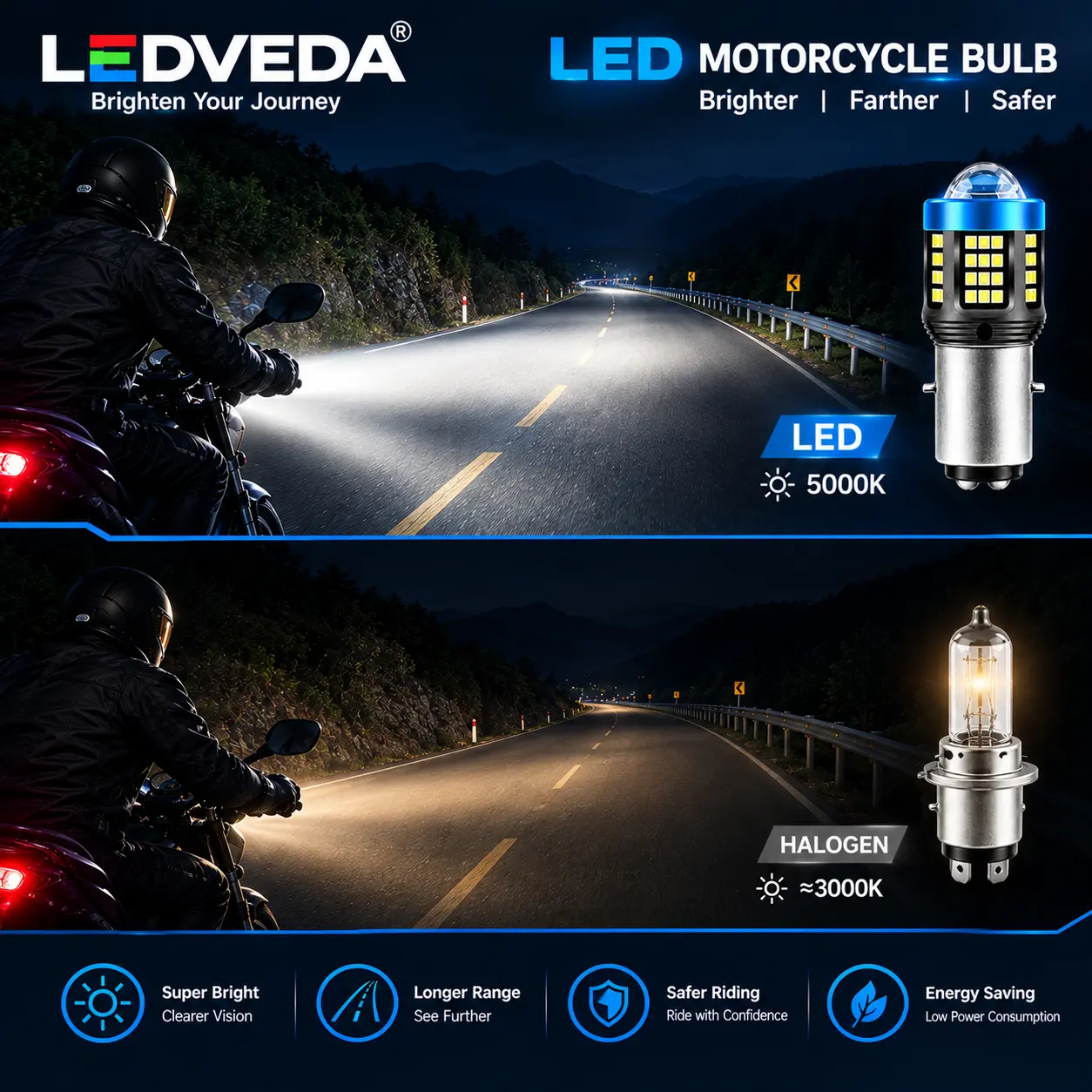
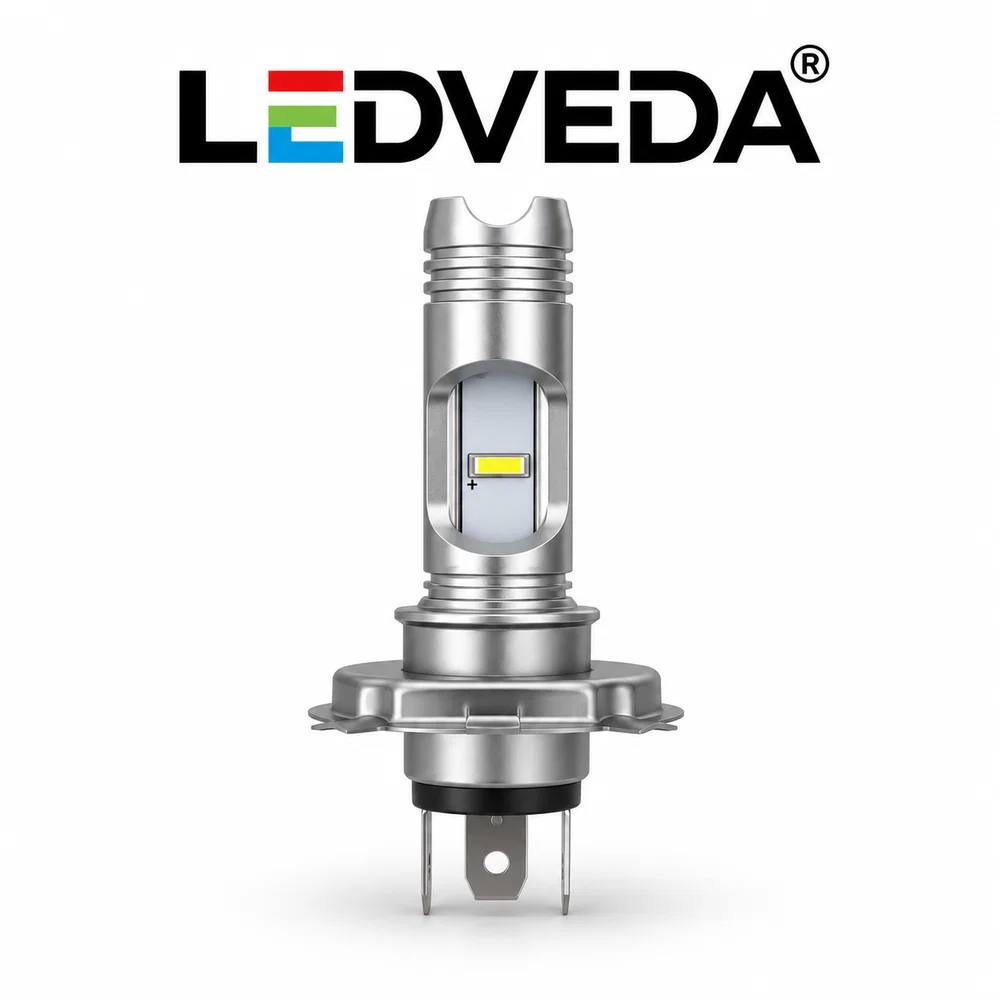
LEDVEDA motorcycle bulb product photos
Actual website product references; confirm the exact base, socket and electrical specifications for each SKU.
FAQ
Can H4 replace BA20D directly?
No direct mechanical interchange should be assumed.
Does a wide voltage range guarantee motorcycle compatibility?
No. Wiring, AC/DC supply behavior, physical clearance and optics still require verification.
Why does LED emitter position matter?
The headlamp optics are designed around a light-source position; changing it can alter beam distribution and glare.
Request motorcycle LED wholesale information
Share a photo of the original bulb, socket, motorcycle model, supply type and required quantity via the LEDVEDA B2B inquiry form. Review the OEM and private-label process for distributor programs.